The hidden D: Desire
The fear map.
There is a choice you would like to make and you don't. It's not data you're missing, it's the courage to look at what you fear. Here you write the monster down, column by column: define what you fear, how you prevent it, how you repair it if it happens. Then you give it a score from 1 to 10. You do the same with the benefits of an attempt and with the price of standing still at 6 months, 1 year, 3 years. At the end you have two risks on the table with numbers next to them, and one of the two grows on its own. Twenty minutes. No email, no account.
Why you need it
Fear doesn't argue: it blocks.
The resignation letter written in your phone's notes and never sent. The listing for that house in another city, checked in secret. When a choice stays open for months, it's rarely the data that's missing. Fear is at the wheel, and fear drives. It always makes the same three moves: it takes the worst damage, inflates it and sells it to you as certain and irreversible. It almost never is.
This is the D of Desire of the 5D Method, the most hidden of the five: what you want, net of the fear of wanting it. Desire speaks quietly, fear shouts. As long as fear is shouting, you can't hear anything else. The map is there to turn that volume down, just enough to hear what you would choose.
The fear, in writing. What you actually fear will happen if you make this choice. No vague lines like "it goes wrong": write what goes wrong.
What you can do starting now so that thing becomes less likely. There is almost always something.
If it happens all the same, how you get back on your feet. This is the column that deflates the fear. Almost every damage has a way back.
The three columns are only page 1, and two pages are missing. On the second you write what you gain even just by trying. On the third you count what you lose by standing still. We are excellent at imagining what goes wrong if we act, and blind to the price of not moving. Pages 2 and 3 are there to open your eyes again.
The map · page 1 of 3
Write the choice, then the fears.
Write the way you speak. The map is yours and nobody reads it. Start with one fear, then add as many as you need. Under each one you find a score from 1 to 10: it measures the permanent damage of the worst case, not how scared you are today.
Everything stays on your device: no account, no email, no cloud. While you write, the map saves itself in your browser. If you clear your browser data, it empties. When you're done, download the PDF or print the map. That copy is yours for good.
The map · page 2 of 3
The benefits of an attempt.
There is a trap here. If you write what happens when everything goes wonderfully, you raise the bar and the fear starts again. Write instead what you take home even just by trying: the skills you learn, the people you meet, the confidence that comes back, the money that moves anyway. That stays yours even if you turn back later.
The map · page 3 of 3
The cost of inaction.
This is the page almost everyone skips. Ferriss considers it the most important one. Not choosing is also a choice, and the bill arrives anyway: how you feel, how much you lose, how you sleep. Write it at three deadlines and watch it grow.
Two risks, measured.
Seen this way, the decision stops being a test of courage. Two risks stay on the table. The risk of acting has a score and written countermoves. The risk of standing still has no countermoves, and it grows at 6, 12, 36 months.
Fear aside, what would you choose if nobody ever had to know?
A map without a move is just a list of fears with scores.
One last thing. This map is not a one-time task: Ferriss redoes it at least once a quarter, because fears change along with choices. Download today's PDF and set a reminder for 3 months from now. Comparing the two maps is worth as much as making the first one.
Want to look at your map with someone who knows crossroads well? Thirty minutes, a coffee, no strings attached.
Optional · the three desires test
Fear aside, what's left?
Fear always tells you what you don't want. Desire is shyer and has to be called with the right questions. Answer on impulse, with the first thing that comes. The three answers also go into the map you download.
The sources
Where this exercise comes from.
The idea is two thousand years old. The Stoics imagined in advance, and in detail, the things they feared, to find them smaller than the mind painted them. They called it premeditatio malorum, the meditation on evils. Seneca, in his thirteenth letter to Lucilius, says it straight: we suffer more often in imagination than in reality. This exercise is that practice, with paper and numbers.
The three-page structure comes from fear-setting, the exercise Tim Ferriss brought to the TED stage in 2017. First each fear, with Define, Prevent and Repair. Then the benefits of even an attempt. Then the cost of inaction at 6, 12 and 36 months. You can find the original at tim.blog and the TED talk. One detail says it all: Ferriss redoes it at least once a quarter. It's not a box to tick, it's a practice.
Think back to the last time you dreaded a no, or an embarrassment. When it finally came, how long did the pain last? Less than expected, almost every time. The research on affective forecasting by Daniel Gilbert and Timothy Wilson measured it: facing a future negative event, we overestimate both its intensity and its duration. In the literature it's called the impact bias. Future pain hurts less, and lasts less, than fear promises you today.
This is not a clinical tool. It's a sheet of paper with the right questions for a choice that scares you. If what you feel is not fear of deciding but a deeper pain, one that takes your sleep or drains your days, the bravest thing is to talk to a mental health professional. That is worth more than any exercise.
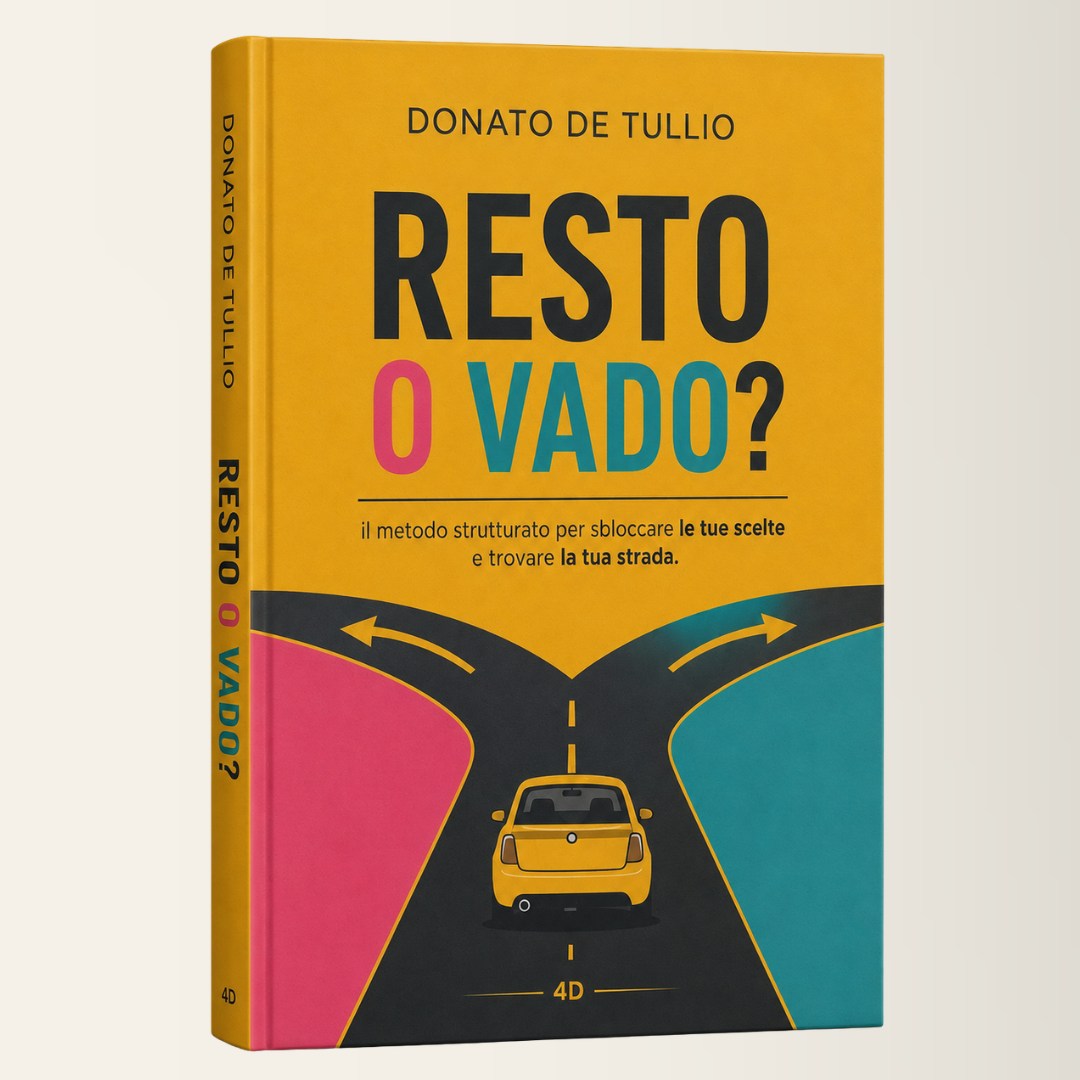
This exercise comes from a book.
The fear map is one of the tools in "Stay or Leave?", the 5D Method for deciding between what you should do and what you want. Desire is the most uncomfortable D, and it's the one holding up all the others. In the book you cross it with the exercises, all the way to a choice signed by you. It comes out in Italian in August 2026 as "Resto o Vado?"; the English edition comes out in September 2026 and you can already pre-order it.
What now?
You have looked at the fear. Now decide.
Who is behind this
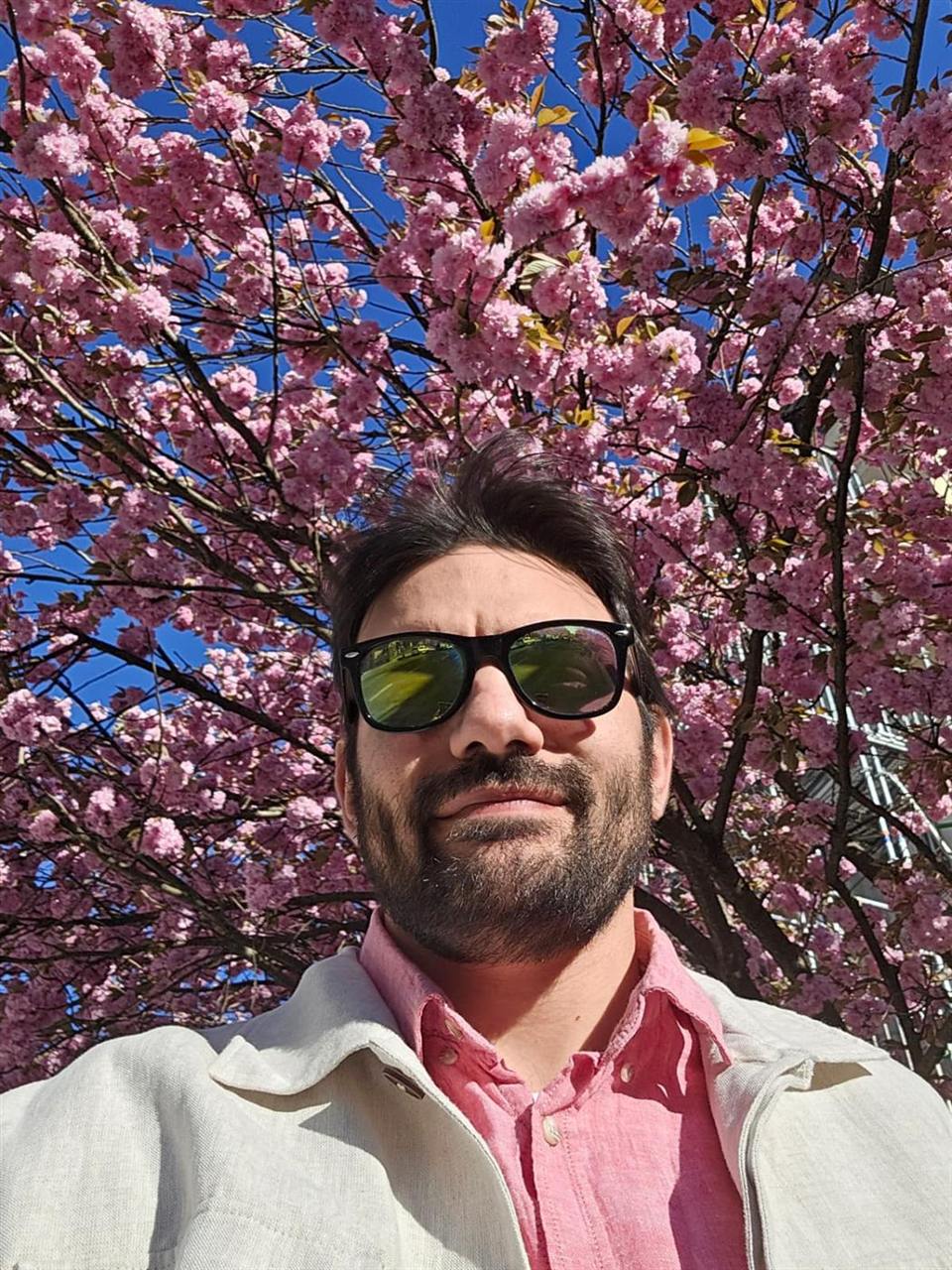
Dr. Donato De Tullio. A scientist's head and hands in operations. I crossed that crossroads myself: after 8 years in science I worked as a warehouse worker at Decathlon and rebuilt a career from zero, carrying every fear on this page. Today I manage 8 logistics centers across Europe. It's all on my LinkedIn.
Alongside my job as a manager, I help people who run their own project decide and move, with the 5D Method. If you want a steady partner at your side, there is Decision Lab, the one-on-one decision-making program.
Made your map?
Let's look at it together.
30 minutes, free, over a virtual coffee. You tell me about the choice that scares you and the fears you wrote, and we see which ones actually hold and which don't. In English, Italian or German.
I stopped asking for email addresses in exchange for resources: the map is yours, the fears too, and they stay on your device with no contact details left behind. If it helped, try the other practical exercises, have a look at the book, and we can always talk over a coffee.