
A measurable result → a date → a move
That open loop won't close itself. Give it a date.
The client who pays you like three years ago. The project stuck for months. The collaboration that leaves you more tired with every call. You already know how it is going, yet it stays open. It is not laziness, it is the money and time you have already put in: quitting now would feel like throwing them away. This exercise does one thing only. Today, with a cold head, you write which result justifies keeping it open and by which date it must be true. If on that date it is not, you exit. You leave with the pact written up as a PDF, the cost of waiting in euros and the check in your calendar.
The method
This is the D of Decision.
In the 5D Method, Decision is not only choosing what to start. It is also choosing what to close, and when. If you work for yourself you know it: nobody forces you to review the underpriced client or the stalled project, so that review never comes. And meanwhile the business manages you.
At the poker table, staying in a losing hand just because you have already bet money on it is the fastest way to lose more. Annie Duke played poker as a professional, then studied decisions. In her book Quit she offers her cure: a measurable result and a date, written beforehand, when the money and time already spent do not yet have a say. She calls them kill criteria. Today you write the criterion while you are clear-headed. On the date, the criterion decides for the tired you.
Pick what keeps you hanging: the client no longer worth it, the stalled project, the single client, the draining collaboration.
The measurable result that would justify keeping it open: a number or a fact anyone could verify.
By when it must be true. I suggest 90 days, rounded to the following Monday, with the time of the check.
The hours the loop absorbs at your rate, plus the missed income: what every month of waiting costs you.
If you exit, how do you feel in 10 minutes, in 10 months, in 10 years? Three horizons, three gut answers.
If on the date the condition is not true, the first concrete act: the email, the phone call, the cancellation. And what you will tell yourself to postpone.
The exercise
Let's write the pact, with a cold head.
Answer the way you talk, from the gut. Nobody reads what you write: everything stays on this device. At the end you have three things in hand. The pact, written like a contract with yourself. The cost of waiting, in euros. And the event to put in your calendar for the day of the check.
One honest thing before you start: this exercise does not decide for you. It helps you write a criterion while you are clear-headed, so that on the date it will not be that day's tiredness deciding.
What keeps you hanging?
Pick the open loop that drains the most energy and cash. One only for this round: you close the others on the next one.
What is the condition for staying?
The measurable result that would justify keeping it open. Write it in the present tense, with a number or a fact anyone could verify: "the client accepts the new price of 60 euros an hour", "3 new clients by the date", "the project brings in 1,000 euros a month".
By when must it be true?
I suggest 90 days from today, rounded to the following Monday: Monday is a good day for settling accounts. Shorten it if the loop is burning cash fast.
What does waiting cost you?
The time of the open loop is not neutral time: those are hours you could sell or invest elsewhere. Put in the numbers and look at the figure.
Don't know it? Calculate your minimum here.
If you exit, how do you feel?
Take the phone call where you let the long-time client go. In ten minutes your stomach is in a knot, in ten months you have twenty free hours a month, in ten years you barely remember it. Suzy Welch calls it the 10/10/10 rule: the same choice, looked at from three distances. One line per field, from the gut. And while you write, keep in mind the finding by Gilovich and Medvec (1995). In the long run people regret the things they did not do far more than the things they did.
If on the date the condition is not true, what is the first exit move?
A concrete act, the first in the chain: the email, the phone call, the cancellation. It must be something you can do in one day.
Writing it now is the vaccine: when you hear yourself say it, you will recognize it.
Your exit pact
Decided today, with a cold head.
The calendar keeps the pact: at the date and time of the check you will find the condition in front of you, written by today's clear-headed you.
That is what the open loop costs you while you wait: it is not neutral time.
This sheet does not decide for you: the criterion you wrote today, clear-headed, does. And closing a loop is not failing. It is freeing cash and attention for what holds up.
A promise told to someone weighs more: you choose who.
Want to reread the condition with someone before the check? Thirty minutes, a coffee, no strings attached.
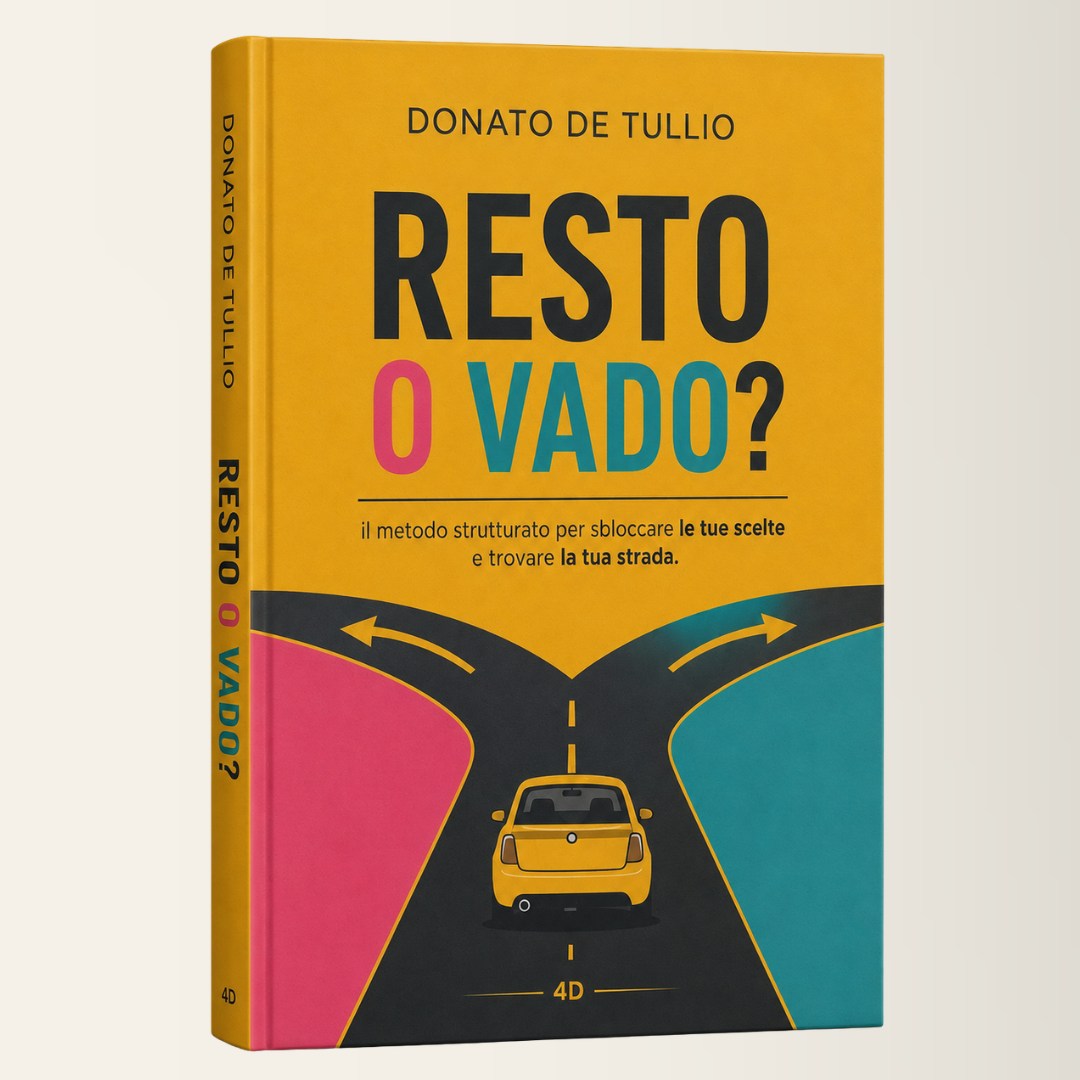
Exit conditions are a piece of a bigger method.
This exercise is the D of Decision from "Stay or Leave?", the 5D Method for deciding between what you should do and what you want. The question is the same as the book's, stay or leave, applied here to clients and projects instead of your job. The crossroads changes, the method does not: a criterion written while clear-headed beats the mood of the moment. It comes out in Italian in August 2026 as "Resto o Vado?"; the English edition comes out in September 2026 and you can already preorder it.
The sources
Where this exercise comes from.
Annie Duke played poker professionally and then studied cognitive science. In her book Quit: The Power of Knowing When to Walk Away (2022) she shows that quitting in time is a skill, and that you train it by deciding in advance: measurable results and dates, written when the costs already spent do not yet have a say. She calls them kill criteria. Here is a summary on Behavioral Scientist.
The cost of waiting comes from the work of Donald Reinertsen (The Principles of Product Development Flow): translating waiting into euros per month makes visible what habit hides. Here we apply it in a simple version: the hours the loop absorbs at your rate, plus the missed income. It is not precision accounting, it is an order of magnitude. And it is usually enough to wake you up.
The three-horizon lens is Suzy Welch's: facing a choice, ask yourself how you will feel in 10 minutes, in 10 months and in 10 years. It takes away from the fear of the first ten minutes the right of veto over ten years of consequences.
Thomas Gilovich and Victoria Medvec (1995, Psychological Review) studied what people truly regret: in the short run actions burn more, in the long run people regret far more the things they did not do. Here is the study. It is the reason the 10/10/10 lens closes with the ten years.
The question in this exercise is the same as the book's: stay or leave. There it is applied to employment, here to the clients, projects and collaborations of people who work for themselves. The mechanism does not change. A criterion written beforehand, a date, and a check that does not depend on that day's mood.
This is not therapy or consulting: it is an orderly way of giving a deadline to what stays open out of inertia. If the open loop is a relationship that is crushing you, talking to someone you trust is worth more than any exercise.
What now?
You closed one loop. Look at the others.
The pact is written and the calendar keeps it. If instead you are about to open something new, or want to track how you decide, these two exercises round out the set.
Who is behind this
Dr. Donato De Tullio. A scientist's head and hands in operations: for more than ten years I have been running projects in large European multinationals, and exit conditions are one of the tools I use to close in time what does not hold up, before it eats the rest. Today I manage 8 logistics centers across Europe. It's all on my LinkedIn.
Alongside my job as a manager, I help people who run their own project decide and move, with the 5D Method: data, direction, decision, destination, desire. If you want a steady partner at your side, there is Decision Lab, the one-on-one decision-making program.

Written your exit pact?
Let's reread it together.
30 minutes, free, over a virtual coffee. You tell me the open loop, the condition and the date you wrote, and we see whether the criterion holds or can be tightened. In English, Italian or German.
I stopped asking for email addresses in exchange for resources: the exit conditions are yours, the result too, and it stays on your device without leaving contact details. If it helped, try the other practical exercises, have a look at the book Stay or Leave?, and we can always talk over a coffee.