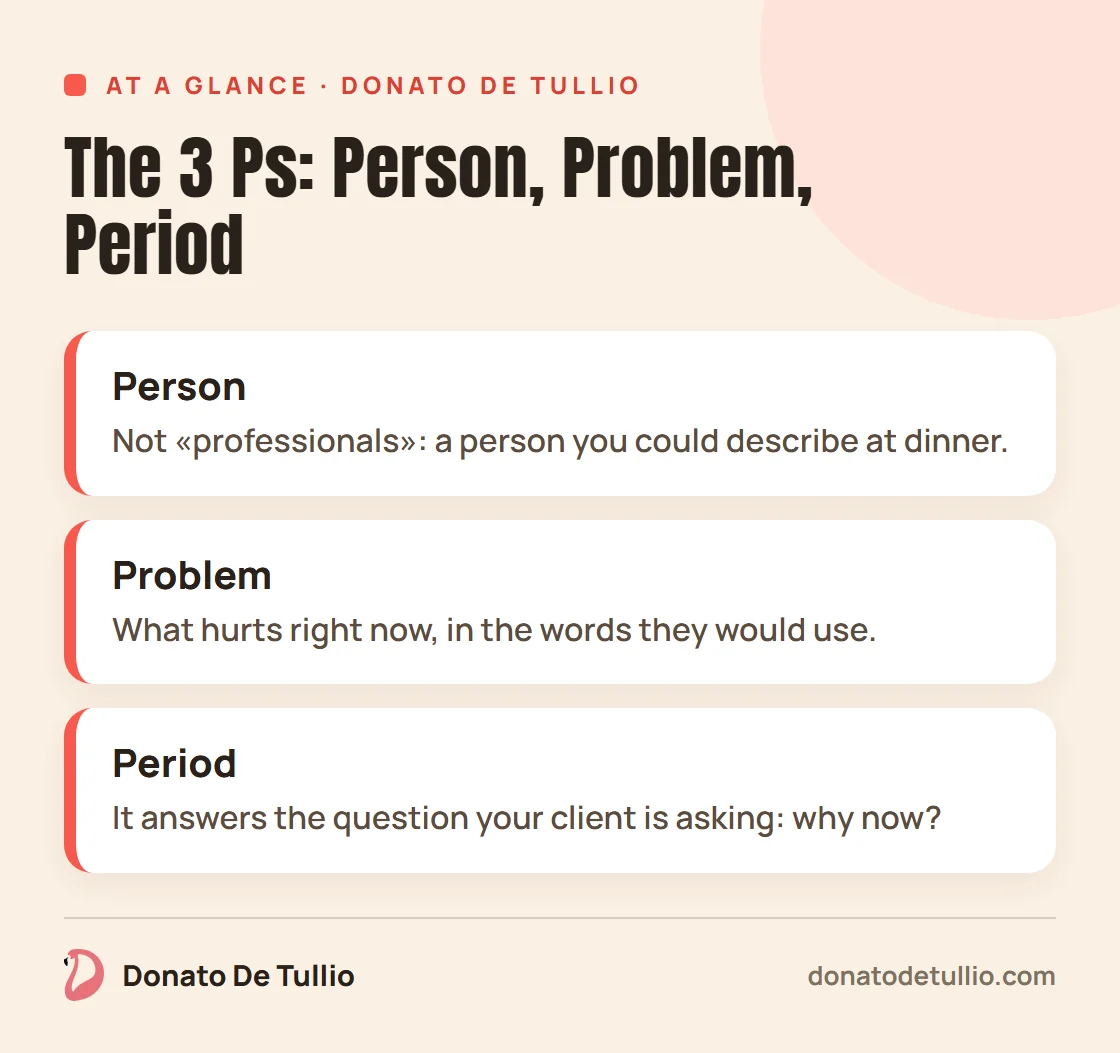
A positioning is written with three Ps: the Person you solve a problem for, the Problem you solve, and the Period of their life in which you solve it. Everyone knows the first two. The third is the one people use least, and it is the one that decides urgency. Same person, same problem, at two different moments are two completely different offers.
«Who do you work with?» «Professionals who want to grow.» Every time I hear an answer like that, I already know how that business is going: few clients, low prices, and the feeling of talking to an empty room.
It is not a talent problem. The positioning is only half written.
The first two Ps you already know
The Person: who they are, what they do, what world they live in. Not «professionals»: a person you could describe at dinner.
The Problem: what hurts right now, in the words they would use. Not «improve their communication», but «the pitch is in three weeks and I'm not ready».
So far, any marketing course. And that is where most courses stop.

The third P: the Period
In a consulting session, working on a client's positioning, the formula came out live:
«Same person, same problem, at two different moments. The period also defines the urgency.»
Take a singer who wants to protect their voice. Clear person, clear problem. But the same person with the same problem is worth two very different things at two moments: off season it is one thought among many, the week before a concert it is an emergency with a price.
The period answers the question your client is actually asking: why now? If your offer has no now, the market's answer is «interesting, I'll think about it». Which is a polite no.
The toothache test
Nobody books a dentist for prevention with the urgency of a toothache. People pay when the urgency is felt, and the moment of pain is when your message has to show up.
Practical question: what is your person's toothache? In which period of their year or their life does it hurt? The pitch coming up, the new role just landed, the project about to start, the season opening. Your positioning lives there.
How to write it, in practice
One line, three Ps inside: I help [Person] with [Problem] when [Period].
This sentence is where the work starts. Then you test it with real clients, and change it if you need to, as I explain in the article on the positioning statement.
- I help singers protect their voice, in the weeks before a concert.
- I help startups get understood by investors, while the round is open.
- I help new team leads manage their former colleagues, in the first six months.
With the period inside, the price stops being a comparison with a thousand competitors and becomes the cost of not solving the problem now. And you know exactly when your content should show up.
Without the period there is no urgency, and without urgency you only sell with discounts.