Choose the group of people who have already paid you, whose problem you know best, and whom you'd still want to work for in five years. Narrowing changes what you say in public, and you can still serve anyone who comes from outside, so the clients you're afraid of losing usually stay.
When I decided to leave research, I had one sentence to my name: «I want to work with people, in an international setting.» I said it with a bit of shame. A chemist with a doctorate who talks like that, I thought, is just admitting he has no idea what to do.
I was wrong. In one stroke that sentence ruled out 90% of the roads I believed possible, and it set me in motion. Standing still with every door open, I hadn't gone anywhere.
Why is choosing so scary?
Because every no looks like one client less, and you worked hard for those clients. You spent years getting good at many things. Picking one feels like throwing the rest away.
Underneath there's often the impostor, the little voice saying you're not yet enough to call yourself a specialist in anything. So you add a course, then another service, and the choice slides to next year.
«If I say no I'll lose everything» is still only a hypothesis. And you can test a hypothesis, with a date.
Does narrowing drive clients away?
Usually not. Your niche is what you say when you introduce yourself, and the front door stays open. If a different kind of client calls and the job interests you, take it.
What changes is something else. People with that exact problem recognize themselves at first glance, and people who know someone with that problem know who to send. When you're «good at lots of things», nobody knows who to send your way.
Michael Porter called it focus, back in 1980: a small player can serve a narrow group better than a big generalist can. Specializing cuts the competition inside your market more than it cuts the market.
I'll also give you the real risk, which is the opposite of the one you fear. The group may be too small, or have no money. The success stories you hear on courses are hand-picked anecdotes and prove nothing. My rule is this: a niche is a niche that buys, otherwise it isn't a business.
How do I choose if I can do everything?
Take a sheet of paper. You need half an hour and no software.
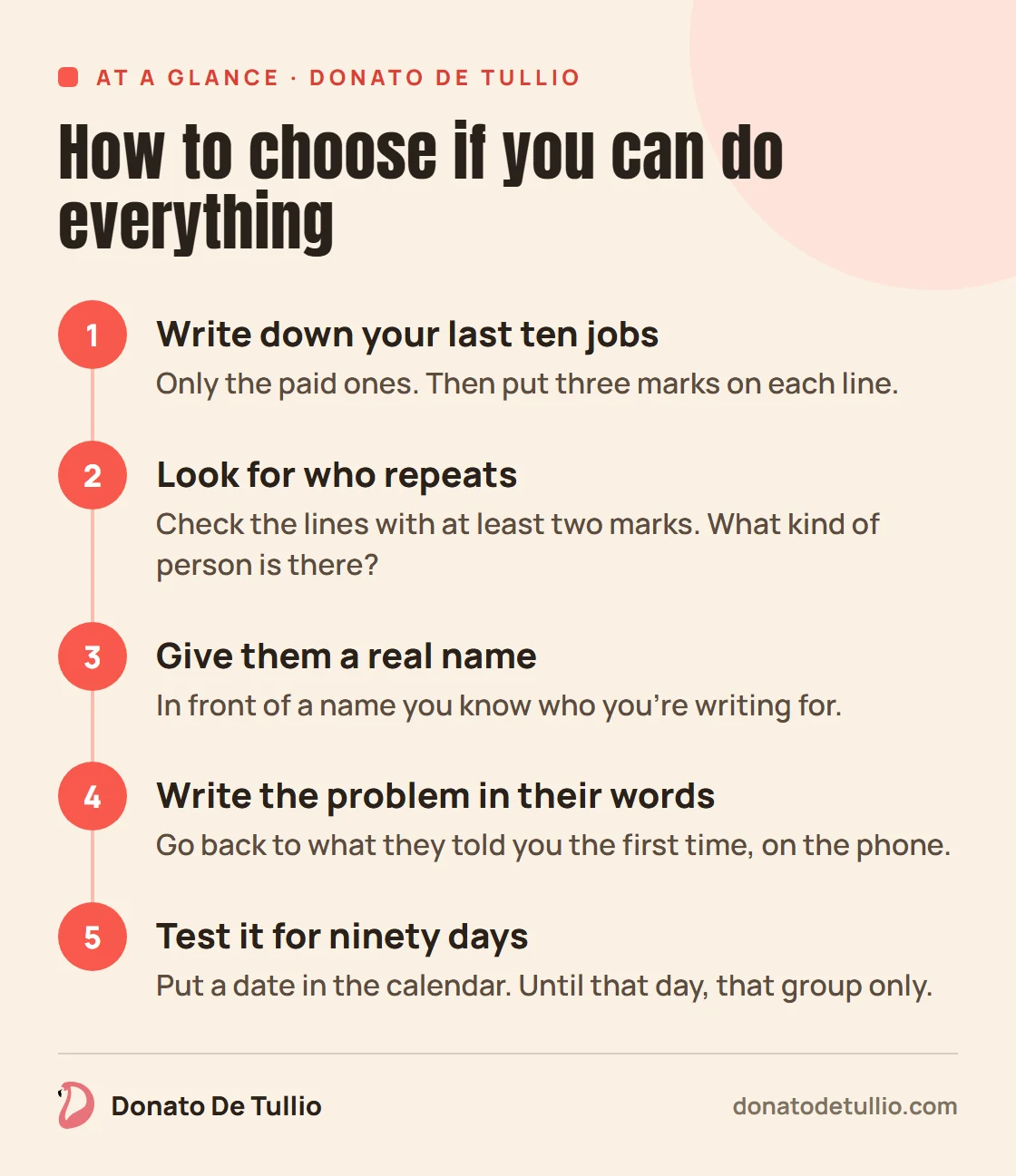
- Write down your last ten jobs. Only the paid ones, with the client's name next to each. Ideas stay out.
- Put three marks on each line. The first if the client asked for it without you proposing it. The second if the job left you something, counting the real hours, emails and revisions included. The third if you'd spend those hours again. I call them thousand-euro hours, against the ten-euro ones.
- Look for who repeats. Check the lines with at least two marks. What kind of person is there, and what moment were they in? Often the group already exists, and you've been serving it without ever calling it by name.
- Give them a real name. Write down two or three ideal clients and call them Francesca or Robert. In front of a name you know who you're writing for. In front of «professionals» you don't.
- Write the problem in their words. Go back to what they told you the first time, on the phone. If you get a brochure sentence, call one of them and ask.
- Test it for ninety days. Put a date in the calendar. Until that day you introduce yourself, write and make offers for that group only.
Your other skills don't vanish, as I explain in one offer, done better. If you're stuck on too many ideas, there's an exercise for that too.
What if I need money now?
Then take the work that comes, all of it. I often say it to people in an emergency: if you can't breathe, you can't be strategic. You can accept a job outside your niche to pay the bills and keep saying one thing in public. Nobody is checking your invoices.
Before you give anything up, look at how many months you can hold out with zero income. In my book the rule is that below three, you don't sign. It applies here too.
How do I know I chose well?
After ninety days, look at three things. Do the people writing to you use your words? Can the people recommending you say who to send? Are the requests coming in closer to what you want to do?
If the answer is no, you change. You change your mind on data, and not on the fears of a Tuesday night.
The niche is the first piece of positioning. To turn it into a sentence you need the 3 Ps: Person, Problem, Period.
If you want to do it with someone who pushes back when you feel like reopening everything, that's the work we do in Position Lab. It starts with an espresso together. Let's have a coffee (30 min).
Frequently asked questions
How narrow should a niche be?
Narrow enough to make someone say «this is for me», and big enough that you can find people who pay. If you can't name ten possible clients it's too narrow. If your sentence would also fit a competitor it's too wide.
If I choose a niche, will I lose my current clients?
Not if you keep serving them. The niche changes what you say when you introduce yourself, and the clients you have stay as long as the work suits you both.
Can I change my niche later?
Yes, with a criterion. Give the choice at least ninety days and a review date, then change if the data says so. People who switch every two months never find out what works.
What if I don't have enough clients to see my niche?
Then the exercise on paper isn't enough. Talk to three people who could buy from you, ask what problem they have right now and test a small offer. The market's answer is worth more than another afternoon at your desk.
Was this useful? Get the next articles by email: leave your address here.

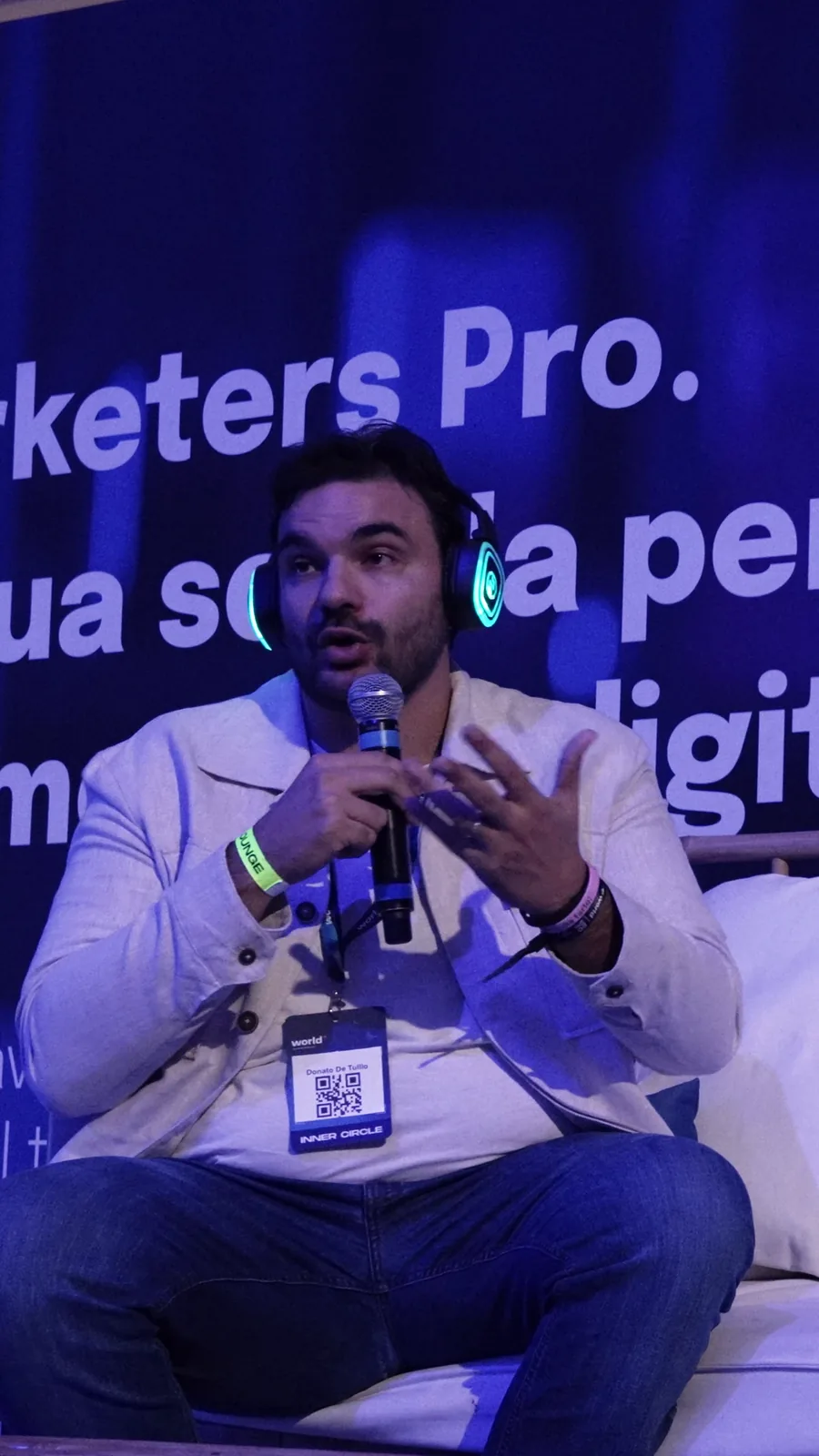
He did his PhD in chemistry with Merck, then spent more than ten years in European multinationals, working his way up from the warehouse floor to running logistics. Today he helps professionals and companies who make a living from their expertise get chosen by the right clients.
About meWhere to start: the positioning guide.